Walk into any modern home or commercial space and you’ll immediately notice the smoothness of the walls. What you don’t see is the technical craftsmanship behind that perfection.
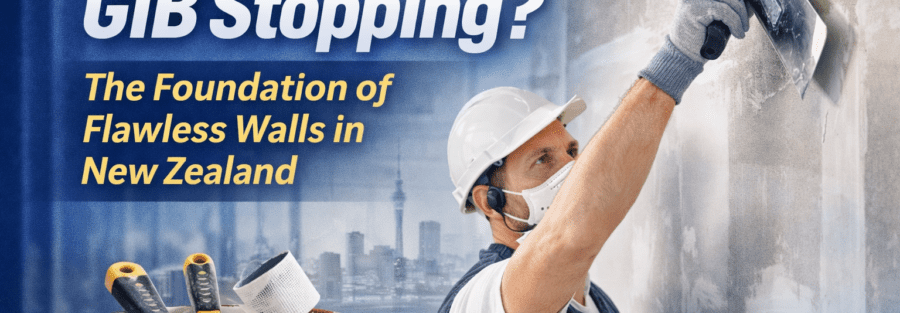
That invisible craftsmanship is called GIB stopping. In New Zealand construction, GIB stopping is not optional — it is the structural finishing process that transforms raw plasterboard into seamless, paint-ready surfaces. Without it, every joint, screw, and corner would remain exposed, weakening both appearance and durability.
Discover what GIB stopping is and why it’s essential for smooth, crack-free walls & ceilings. Auckland’s trusted experts for durable, professional finishes.
The True Definition of GIB Stopping in NZ Construction
GIB stopping is the specialised finishing process applied after plasterboard installation. It involves reinforcing, filling, layering, smoothing, and refining all joints and fixings to create a continuous surface across walls and ceilings.
In simple construction terms:
-
- GIB lining installs the boards.
-
- GIB stopping makes the boards disappear.
It ensures that the entire surface behaves as one unified structure instead of separate panels.
Why GIB Stopping Is Critical in Timber-Framed New Zealand Homes
New Zealand properties are primarily built using timber framing. Timber expands and contracts due to temperature and humidity changes.
That natural movement creates stress along plasterboard joints.
Without professional stopping:
-
- Hairline cracks appear
-
- Joint lines shadow under lighting
-
- Corners separate
-
- Paint reveals imperfections
-
- Structural stress increases over time
Proper GIB stopping absorbs this movement through reinforcement and layered application. It is not just cosmetic — it is structural surface protection.
The Professional GIB Stopping Process Explained
Many assume stopping is simply “applying filler.” In reality, it is a controlled multi-stage system requiring precision.
Surface Preparation & Inspection
Before compound application begins, professionals inspect:
-
- Board alignment
-
- Screw depth
-
- Joint gaps
-
- Framing movement risk
Preparation determines final quality.
Joint Taping for Reinforcement
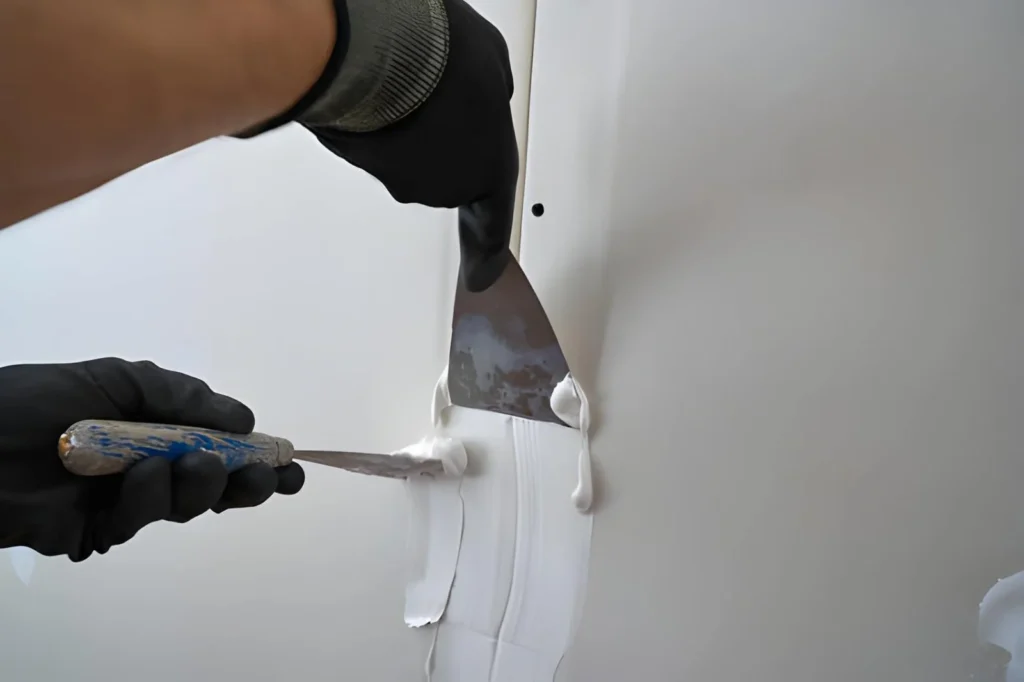
Specialist joint tape is embedded into compound along every join.
This reinforcement prevents future cracking by distributing stress across the seam.
Multi-Layer Compound Application
Stopping compound is applied in multiple coats:
-
- Base coat to secure tape
-
- Build coat to widen and level
-
- Finishing coat to feather edges seamlessly
Each layer must dry fully before the next application.
Corner Structuring & Strengthening
Internal and external corners are shaped and reinforced carefully. Weak corners are one of the first areas to fail if done incorrectly.
Precision Sanding & Surface Refinement
After curing, sanding is performed with controlled pressure to ensure smoothness without thinning reinforcement areas.
Light-Level Inspection
Professionals check surfaces under angled lighting to detect micro-imperfections that standard inspection would miss.
This stage separates average workmanship from premium results.
GIB Stopping Finish Levels and What They Mean
Not all finishes are equal. The level of finish required depends on lighting conditions and paint type.
Level 3 Finish
Basic finish used behind tiles or textured areas.
Level 4 Finish
Standard paint-ready finish suitable for most residential builds.
Level 5 Finish
High-end skim finish applied across the entire surface. Required for:
-
- Feature lighting
-
- Gloss or dark paint
-
- Architectural homes
-
- Commercial presentation areas
The higher the finish level, the more skilled labour and attention to detail required.
Where GIB Stopping Is Essential
GIB stopping is required in nearly every interior project:
-
- New residential builds
-
- Renovations and extensions
-
- Ceiling replacements
-
- Office fit-outs
-
- Apartment developments
-
- Retail spaces
-
- Water damage repairs
Wherever plasterboard exists, stopping is mandatory for professional results.
Common Failures Caused by Poor GIB Stopping
When corners are rushed or low-quality materials are used, problems appear quickly.
Typical issues include:
-
- Bubbling or lifting tape
-
- Uneven sanding marks
-
- Visible ridges under LED lighting
-
- Cracking along joins
-
- Flaking compound
-
- Surface depressions
These defects often become noticeable only after painting — when repair costs increase significantly.
How GIB Stopping Directly Impacts Paint Performance
Paint does not hide imperfections. It enhances them.
Modern LED lighting especially exposes:
-
- Surface waves
-
- Poor feathering
-
- Inconsistent sanding
-
- Joint visibility
High-quality stopping ensures:
-
- Even paint absorption
-
- Uniform light reflection
-
- Long-term crack resistance
-
- Premium finish appearance
Think of stopping as the engineering beneath the paint layer.

Is GIB Stopping the Same as Plastering?
While related, they are not identical.
GIB stopping focuses specifically on:
-
- Joint finishing
-
- Screw hole filling
-
- Surface levelling of plasterboard
Plastering may include broader applications such as skim coating or exterior rendering.
In most New Zealand homes, GIB stopping forms a core part of the interior plastering system.
Why Professional GIB Stopping Is a Smart Investment
DIY attempts often underestimate the skill involved.
Professional stopping requires:
-
- Technical understanding of compound behaviour
-
- Experience with NZ timber movement
-
- Correct tape embedding technique
-
- Controlled sanding without surface damage
-
- Knowledge of finish-level requirements
The difference between amateur and professional stopping becomes obvious under lighting — and even more obvious after 12 months of structural movement.
Investing in experienced professionals prevents recurring repairs and protects long-term property value.
When Should You Choose a Premium Finish?
If your property includes:
-
- Open-plan living areas
-
- Large ceiling spans
-
- Skylights
-
- Downlights
-
- Feature walls
-
- Dark or high-sheen paint
Then premium-level stopping is not optional.
These environments magnify surface flaws instantly.
Final Insight: GIB Stopping Determines Interior Quality
Behind every flawless interior lies precise stopping work.
It determines:
-
- Surface smoothness
-
- Crack resistance
-
- Paint durability
-
- Visual perfection
When done correctly, it becomes invisible.
And that invisibility is the mark of true craftsmanship.
What is GiB Fixing and Stopping?
In interior plastering, you’ll often hear the terms GIB Fixing and GIB Stopping, especially when renovating, building a new home, or preparing walls for decoration and painting. But what do they actually mean?
GIB is a brand name commonly used in New Zealand to refer to plasterboard (similar to drywall in other countries). It’s the material used to line walls and ceilings, creating a smooth surface for finishing.
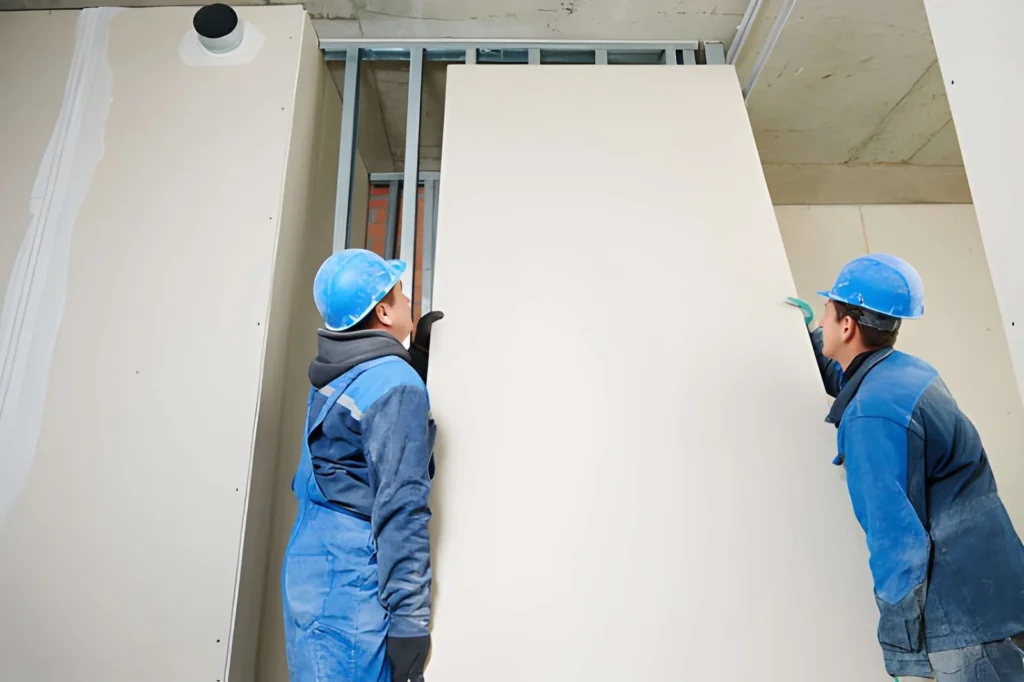
GIB Fixing is the process of installing plasterboard sheets onto the framing of walls or ceilings. This involves cutting the boards to size, securing them with screws or nails, and ensuring they are properly aligned.
GIB Stopping comes next—it’s the finishing stage. This involves applying joint compound (often called “stopping”) over the seams, screw holes, and edges to create a seamless, smooth surface ready for painting or wallpapering.
Why Use GIB Boards?
Before we explain GIB Fixing, it’s important to understand what GIB actually is.
GIB boards—known internationally as drywall or plasterboard—are made from natural gypsum and 100% recycled paper. They are sustainable, non-toxic, and environmentally friendly, as they avoid using fly ash (a coal by-product) as filler. This makes them the preferred choice for ceilings and walls in Auckland and beyond.
Compared to traditional drywall, GIB boards are:
- Cost-effective and widely available
- Easy to install with a smoother finish
- Versatile, with specialized options for fire resistance, water resistance, soundproofing, impact resistance, or combinations of these features
Because of these qualities, GIB boards are considered one of the most practical innovations in modern construction.
What is GIB Fixing?
GIB Fixing refers to the installation of GIB boards on walls or ceilings. A professional known as a GIB fixer handles this process, ensuring that boards are properly fitted, aligned, and secured. They also repair dents, holes, or damage to achieve a flawless surface ready for decoration.
The most common fixing method combines screws and adhesive glue:
- Screws are placed around the perimeter of each sheet
- Glue is applied where the boards meet battens for extra strength
Done correctly, GIB Fixing guarantees the smoothest possible finish for painting or wallpapering.
How is GIB Fixing Done?
The process involves several careful steps:
-
Preparation – The substrate (surface) must be leveled and cleaned before installation.
-
Layout Planning – Boards are cut and arranged to minimize end joints.
-
Positioning – Sheets are fixed at right angles to battens, which themselves are fixed at right angles to trusses and joists.
-
Adhesive Application – Glue daubs are applied along battens, starting at the ceiling-wall junction.
-
Sheet Placement – Boards are lifted into position, supported by T-braces, then screwed into place along battens and edges.
-
Back-Blocking (if needed) – When end joints can’t be avoided, strips of plasterboard are laminated behind the joints to strengthen them and create a smooth taper.
This combination of precision cutting, adhesive bonding, and reinforcement ensures durability and a seamless finish.
What is GiB Stopping?
Another common question is: What exactly is GIB stopping?
GIB stopping is the finishing stage of plasterboard installation. It includes wall skimming, interior plastering, texture removal, and preparation for painting. The goal is to achieve a smooth, sharp finish on walls and ceilings so they’re ready for decoration.
The process begins with bedding the first coats using a high-adhesive interior plaster. Subsequent coats are applied to create the flattest possible surface. Joints are then covered with a sandable stopping compound, which is smoothed through sanding. A halogen light is often used to highlight imperfections, followed by touch-ups and a final spot-check to ensure a flawless result before painting.
Should you hire a professional for GIB fixing and stopping?
While it’s possible to attempt GIB fixing and stopping yourself, it’s strongly recommended to leave the job to professionals. The process requires precision, adherence to standards, and attention to detail that can be difficult to achieve without experience.
Professional GIB fixers and stoppers bring several advantages:
- They follow correct sheet layout and back-blocking according to AS/NZS 2588:2011 standards, ensuring maximum crack resistance.
- They make sure the framing complies with NZS 3609:1999, preventing structural issues.
- They minimize butt or cut joints and place joints away from high-movement areas such as corners, doorways, stairwells, and junctions.
- Their craftsmanship blends seamlessly with your existing interior and coordinates with other trades on-site.
Stopping can hide minor imperfections, but even the best stoppers cannot fully correct poor fixing. That’s why hiring professionals from the start is essential if you want a flawless, long-lasting finish.
With this knowledge, you now understand the basics of GIB fixing and stopping—the processes, the standards, and why professional expertise matters. If you’re planning plasterboard installation in your home, you’ll be able to use the right terms and make informed decisions.
Ready to transform your walls and ceilings?
At Interior Dry Wall Worx, we specialize in professional GIB fixing and stopping, delivering smooth, flawless finishes that last. Don’t settle for DIY mistakes—trust the experts who follow industry standards and guarantee quality results.
📞 Contact: 027 521 7411, Dry Wall Worx today to book your consultation and give your home the perfect finish it deserves!
People Also Ask or FAQs
What is GIB Stopping?
GIB® Stopping is the finishing stage after fixing. It involves applying joint compound over seams, screw holes, and edges, then sanding to create a seamless surface ready for painting or wallpapering.
What is the difference between gib stopping and plastering?
The simplest way to explain it is this: GIB® stopping is specifically about finishing plasterboard surfaces—covering joints, screw holes, and edges to create a smooth base for painting or decorating. Plastering, however, is a broader finishing trade that applies to many surface types, such as brick, concrete, or older lath walls. That difference influences the tools, compounds, techniques, and the final result. GIB® stopping is specialized and precise for modern plasterboard systems, while plastering encompasses a wider range of traditional and contemporary finishes.
How long does it take to GIB stop?
Most GIB® stopping jobs take 3–5 days. This timeframe usually includes 1–3 visits for the stopping process itself, allowing for drying time between coats and sanding to achieve a smooth finish.
Why use GIB boards instead of traditional drywall?
Most GIB® stopping jobs take 3–5 days. This timeframe usually includes 1–3 visits for the stopping process itself, allowing for drying time between coats and sanding to achieve a smooth finish.